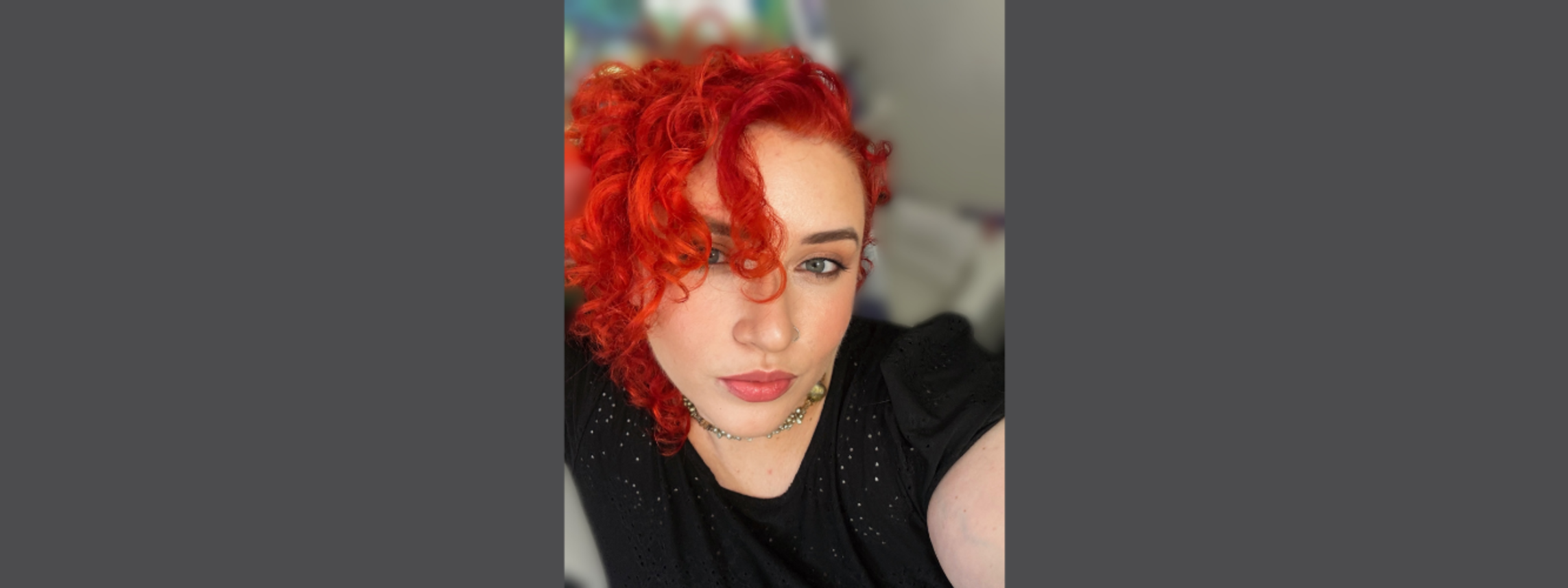
Alumni Spotlight: Sarah Gilbert ’11 MM
Sarah Gilbert is an online Community Manager at Microsoft, where she leads engagement and strategy for Microsoft 365, Copilot, and Public Sector audiences across GCC, GCC High, and DoD environments. Before entering the tech world, Sarah trained and worked as a professional opera singer, earning her Master of Music from the New England Conservatory.
Her background in classical music continues to shape her approach to digital community building — bringing a unique blend of creativity, systems thinking, and human-centered communication to high-impact, technical spaces. Sarah has spoken and written about the power of nontraditional career paths, and how artistic training builds the exact skills needed for a future shaped by AI.
Whether onstage or online, she’s passionate about creating spaces where people feel seen, heard, and empowered to bring their full selves forward.
Why did you choose NEC?
I chose NEC because I wanted something that would completely challenge me — artistically, personally, and creatively. I was drawn to its reputation for excellence in classical music, but what really sealed it for me was how NEC fostered individuality and expressive freedom. I knew I didn’t want a traditional academic path; I wanted to be pushed, stretched, and surrounded by artists who weren’t afraid to take risks. Boston itself felt alive with music, and when I visited, something just clicked. It felt like the kind of place where I could grow into the version of myself I hadn’t met yet — and that turned out to be true.
What have you been up to since graduating from NEC? What projects have you been working on? Do you have any goals you are looking to accomplish?
Since graduating from NEC, I’ve gone from classical music stages to one of the most technical, fast-moving corners of Microsoft — and honestly, I use my conservatory training every single day.
Now that I am an online Community Manager, I run discussions with engineers, moderate high-traffic community spaces, manage AMA events, and collaborate with product marketing to surface real user needs. A lot of my work happens at the intersection of strategy, support, and trust — especially now with the rise of AI. And that’s where my background sets me apart.
The same skills I used to interpret music — reading patterns, listening deeply, adjusting in real time — are the same ones I use to navigate human complexity in tech. I’ve spoken publicly about this, including in Cybersecurity Ventures and on The Geek Within podcast: being classically trained doesn’t make me less qualified for tech — it gives me an edge. It helps me spot nuances others miss, communicate clearly under pressure, and create experiences that center users rather than just metrics.
I’ve also contributed to the Code Like a Girl publication, and have been involved in the M365 for Government Community Podcast, which brings practical updates and real talk to the public sector cloud space.
These days, I still perform when I can — but I also treat my work as its own kind of creative expression. My goals now are to keep building smarter, more human-centered community systems, help others from unconventional paths thrive in tech, and show that you don’t have to leave your artistry behind just because your job title changes.
What are some of your favorite memories from your time at NEC?
Some of my favorite memories from NEC are layered — like the characters I loved portraying. Playing the Sorceress in Dido and Aeneas stands out as one of the most fun and complex roles I took on. There's something uniquely satisfying about embodying an "evil" character in a fantasy setting, where every choice you make onstage feels heightened and symbolic. It gave me room to stretch, both vocally and dramatically.
But what really made NEC unforgettable were the people. I was lucky enough to work with the late Terry Decima ’66 MM, a brilliant vocal coach whose influence shaped not just my technique but my belief in my own voice. Terry challenged me in all the right ways — he had this rare gift of being both sharp and warm, pushing you to your edge while still making you feel safe enough to take artistic risks. He saw something in my voice that I hadn’t seen in myself yet. His passing in 2022 was a deep loss, but his impact continues to live in the way I show up, not just as a performer, but as a person.
And honestly, it wasn’t just the stage time — it was the late-night hallway rehearsals, the friendships forged over coffee and critique, and the aliveness of being in Boston, where music was always in the air. NEC was more than a conservatory. It was where I learned how to be a fuller version of myself, onstage and off.
Share a story about one of your favorite faculty or studio instructors.
One of my favorite memories from NEC was during a coaching session with Terry Decima, who was my vocal coach and accompanist. He once told me, “You’re a very unconventional person who happens to have classic tastes.” I asked him, half-joking but half-curious, “Is that a bad thing?” And he said, without missing a beat, “Not at all. It’s actually refreshing to be around.”
That moment stuck with me. At a place like NEC, it’s easy to feel pressure to conform — especially when recital requirements or traditions come into play. At the time, there was a rule that your recital had to include Baroque arias. Baroque isn’t a natural fit for my voice — I’m more of a dramatic/lyric soprano with a three-octave range — and I noticed most people were choosing the same handful of overdone arias.
I decided to take a different route. I did my research and brought in arias by Riccardo Broschi, written for castrati, that allowed for both technical demand and personal expression. I wasn’t sure how Terry would react — I worried it might seem like I was trying too hard to be different. But instead of pushing back, he praised the choice. He appreciated the effort, the individuality, and the fact that I was trying to find something that fit me instead of forcing myself to fit a mold.
How have your NEC experiences shaped your artistic approach?
NEC shaped how I approach both art and work by pushing me to take creative risks and stay grounded in who I am — even when I didn’t fit the mold. It wasn’t just about singing the notes or meeting expectations; it was about learning how to bring my true self into the room, make bold choices, and still meet a high standard. That experience trained me to thrive in high-pressure environments, to trust my instincts, and to value originality over perfection.
Those lessons stayed with me as I moved into tech. I’m not afraid to go first in a conversation, to try something different in a community strategy, or to push for clarity when it matters. The intensity of NEC taught me how to keep showing up with integrity — even when something is hard, uncertain, or unconventional. It gave me the backbone I needed to lead, not just perform.
Share any other stories about what has inspired you at NEC and beyond.
What inspires me most these days is seeing how the encouragement to fully own my voice applies in the other areas of my life. Whether I’m moderating a live AMA, helping someone feel heard in a digital space, or explaining how music training builds better AI collaborators, it all comes back to that same idea: your voice has value. Don’t make it smaller to fit the room. Make the room better by using it.
Do you have any advice for young musicians/current NEC students?
Don’t be afraid to take a path that looks different from the one you imagined when you first got here. The skills you’re building at NEC — artistic intuition, deep focus, emotional presence, adaptability — those are rare, and they matter everywhere, not just on stage. Your training is already giving you an edge, even if you don’t see where it leads yet.
Lean into what makes you different. That thing you think might make you “less classical” or “too unconventional” is often what people will remember most. I used to worry that I was too outside the mold — now that’s what sets me apart in tech.
Also: build other muscles. Explore writing, storytelling, digital tools, even tech basics. Not because you’re giving up on music — but because you’re expanding what you’re capable of. Your artistry isn’t confined to one career. It goes wherever you go.
Learn More About Sarah:
Current Job: Community Manager at Microsoft
Major: Vocal Performance
Degree: Master of Music
Class Year: 2011
Instrument: Voice
Do you want to be featured in an Alumni Spotlight?