
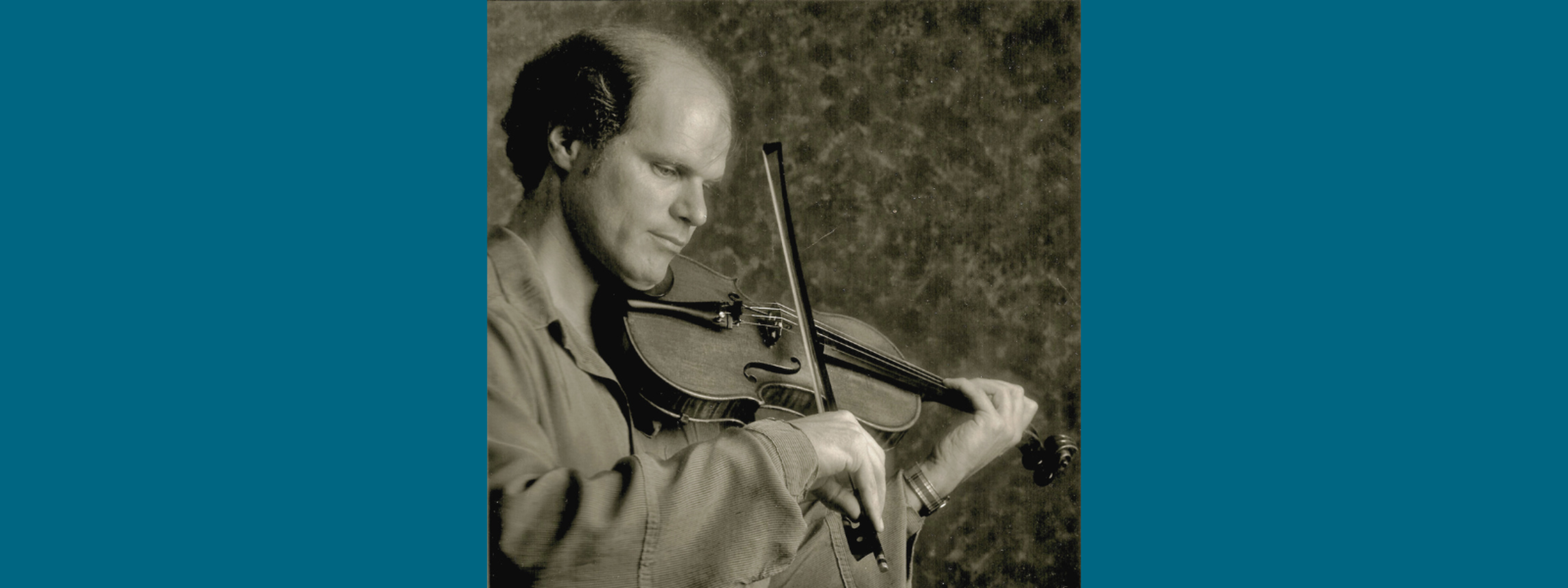
Alumni Spotlight: David Reffkin ’73
David Reffkin’s professional work combines the art and science of music with numerous personal interests. Through disciplined formal study and acquired skills he enhances his performing career with notable efforts in education, research, journalism, and management. His reputation is also founded on success as a consultant, public speaker, broadcaster, audio engineer, interviewer, contractor, event director, archivist, and visual artist.
David’s explorations and depth of study are comprehensive. One of his two radio programs on music was broadcasted each week without interruption for 30 years, an industry record. A third program pursued a personal curiosity: David began a series of broadcast interviews with renowned researchers in certain areas of physics. This quickly developed into a unique program that was internationally recognized for its quality and depth. Even within these esoteric, technical subjects he was able to draw out musical considerations and connections from his guest scientists.
Why did you choose NEC?
NEC was the best school for my interests and located in an inspiring city.
What have you been up to since graduating from NEC? What projects have you been working on? Do you have any goals you are looking to accomplish?
I have made a career as a violinist, playing almost every kind of music that can be played on a violin. My working environments vary: orchestras, chamber music for schools and health centers, hotel trio, Gilbert and Sullivan theater, studio sessions, public school and private teaching, and formal and informal gigs.
A large part of my work has been in ragtime music and the research of its era, broadened to include all popular, dance, theater, and salon musics from 1880-1930. I helped start and continue to maintain the largest annual ragtime festival in the world. I produced and hosted a 30-year weekly ragtime radio program, and was contributing editor for the most prominent journal of ragtime. All of these experiences were inspired by Gunther Schuller ’78 hon. D.M, first as an engineer on the Red Back Book album, and later as violinist with the New England Ragtime Ensemble.
What are some of your favorite memories from your time at NEC?
My favorite memories at NEC include rehearsing and performing in Jordan Hall, discovering music of past and present eras, working with faculty and visiting artists as a student and as an Audio Department collaborator, being among understanding students, and making friends.
It was a high honor to be invited to participate in NEC's Commencement ceremonies as both the 25th and 50th anniversary class years’ Alumni Marshal.
Share a story about one of your favorite faculty or studio instructors.
I don't remember his name but a temporary chamber music coach, working under Wendell English of the Music Education department, changed my view of Baroque music. He taught us to think of the Bach piece we were playing as having a "swing" character. As he refined this instruction, we understood that much of historical music was in fact meant to be played not with a rigid mechanical feel, but as music for dance, its original purpose.
How have your NEC experiences shaped your artistic approach?
NEC’s open-minded approach to music from around the world, the respect to composers and details of their pieces, and the consideration for other musicians' interpretations have all been in mind as I play old pieces and learn new ones. I also learned to consider the origins of each piece and the piece’s relation to other works by the same composer, cross-referencing details to understand the full intent.
On a larger scale, I took the "Start a Renaissance" theme (originally a fundraising slogan from 1971) seriously and deeply. Combined with Gunther Schuller's motto of being the "complete musician," my musical adventures have led me to journalism, editing, counseling, historical documentation, and other areas not typically explored by many musicians.
Share any other stories about what has inspired you at NEC and beyond.
During my entire four years of study, I was also an employee in the Audio Department, recording concerts and recitals, running PA, and repairing and customizing equipment. I learned much about acoustics, electronics, editing, sound reinforcement, and working with people. I helped build the Firestone Library, create the archive of NEC recordings, and record albums for ensembles and soloists, including the Grammy-winning Red Back Book Album. All this invaluable training and experience has contributed to the person and musician I have been for the past 50 years (and also paid for my first car).
One extraordinary anecdote that I usually characterize as "a story you will never forget." After we recorded the Red Back Book album during my senior year, The NEC Ragtime Ensemble gave its first formal concert in Jordan Hall two days before graduation. I decided then that "that's what I want to do." I started my own band, The American Ragtime Ensemble. I became the most reliable source of information on the Red Back Book publication of ragtime orchestrations (formally titled "Standard High-Class Rags"). It's a rare, elusive item not found except by one person since the decline of the ragtime era. I have since given talks and written articles about that collection.
About 35 years later, I was in a music store, where the manager was unloading a box of donated materials. She confirmed I was interested in ragtime, and handed me - free of charge - material she had no interest in: nine of the eleven parts of the Red Back Book! A quick search led to someone who happened to have the two parts I was missing. Thus, I became only the second person in modern times to own the complete set - I, one of perhaps five people in the world who had a serious interest in that particular item!
Do you have any advice for young musicians/current NEC students?
- Ask questions.
- With some judicious selection, don't be afraid to try a novel interpretation or play a "wrong" note.
- When appropriate and necessary, go back to original sources: manuscripts, books, folios, and analog recordings. Not everything is in digital archives, or ever will be.
- As a musician contractor, understand the difference between an employee, a colleague, a client, an interested third party, and a disinterested outsider (this is more subtle, frequently required, and important than you may think!).
- Be respectful to musician contractors.
- Never, ever be late.
- Never, ever be unprepared.
Learn more about David
Class year: 1973
Major: Violin Performance
Degree: Bachelor of Music
Current job: Violinist, contractor, orchestrator, conductor
Website: davidreffkin.com