
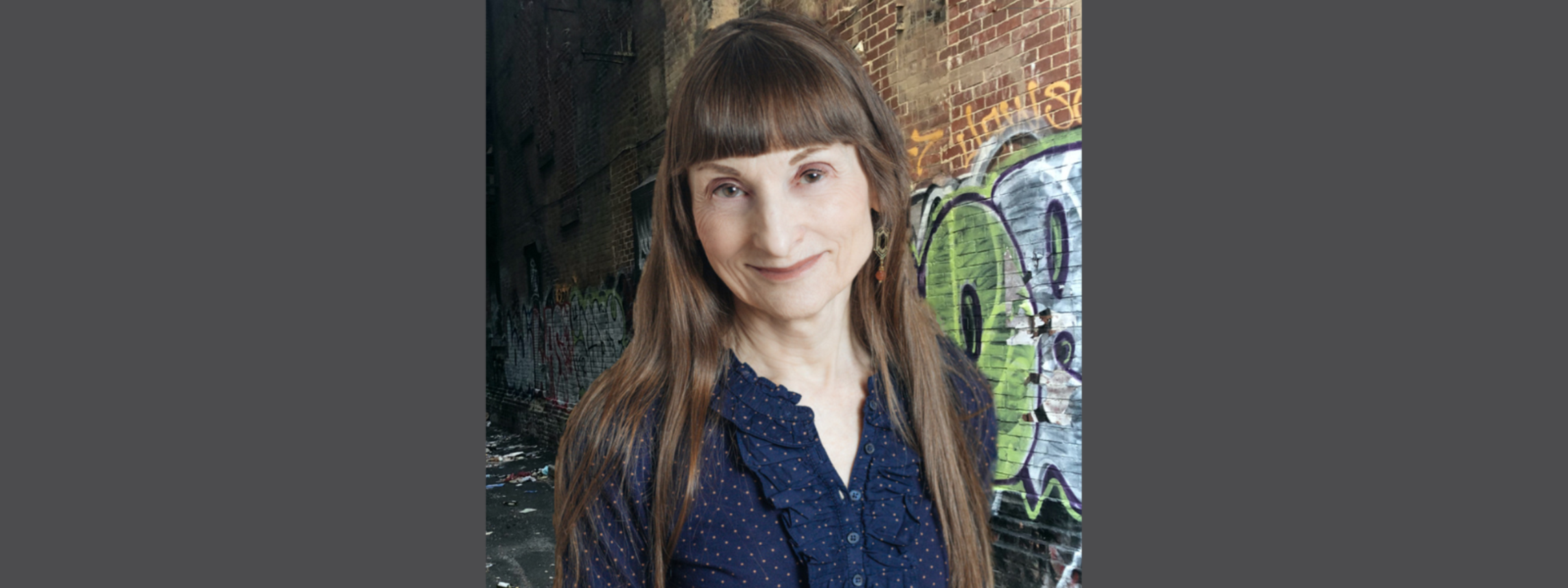
Alumni Spotlight: Margaret Panofsky '74 MM
Margaret Panofsky grew up in the hills of Northern California. After she received her Bachelor of Arts at Stanford University, she attended NEC and graduated with a Master of Music in viola da gamba. While in Boston, she gave lessons at Powers Music School and performed with Fiori Musicali and the New England Consort of Viols. Later, she returned to California where she instructed and performed with the San Francisco Baroque Ensemble and the Lydian Ensemble. In 1989, she and her family moved to New York City where she taught the viol and the collegium musicum at New York University until 2019. While at NYU, she founded and directed an affiliated viol consort, The Teares of the Muses.
Recently, she’s taken up writing science fiction – her titles include two published novels, The Last Shade Tree and Day of the Jumping Sun.
Why did you choose NEC?
When I was a student, very few higher education institutions in the U.S. provided opportunities to study early music. I met two of NEC's early music professors, Kenneth Roth ’70 and Nancy Joyce Roth ’69, ’71 MM, at Stanford University where I was completing my Bachelor of Arts in music, playing the viola da gamba. At the time, NEC’s Early Music department was in its infancy, but I didn’t need much persuading to enroll and jumped at the chance.
What have you been up to since graduating from NEC? What projects have you been working on? Do you have any goals you are looking to accomplish?
My time at NEC was both intense and magical. Everything I learned prepared me for many different phases of my career. After graduation, I taught part-time at Powers Music School in Belmont, MA, performed in two professional groups, and worked at a harpsichord shop in Boston. Eventually, I moved to Northern California, married a fellow musician, and became a mother – after which my playing and teaching career really began to flourish. I wrote a bass viola da gamba technique book featuring my own exercises that includes photos of bow and finger positions. This book, now out of print, went through two editions and decked many a viol student’s music stand. In 1989, my family and I moved to New York City, and I taught viol consorts, private lessons, and classes at New York University for thirty years. I also later founded and directed a performing viol consort loosely tied to the university called The Teares of the Muses.
Recently, I have taken up writing science fiction. My first novel, The Last Shade Tree, was released in 2017 and my second, Day of the Jumping Sun, in 2022. I am also beginning work on my third novel.
What are some of your favorite memories from your time at NEC?
A week into my first semester at NEC, I volunteered to perform Telemann’s “Concerto for Recorder, Viola da Gamba, and Strings” in Jordan Hall. When the first few notes sounded, I realized that the concert hall itself would carry me through that performance. I will forever be in awe of the exquisite timbre of early music in Jordan Hall.
I also have fond memories of walking past the NEC dormitories on Gainsborough Street. The instrumental and vocal sounds wafting from the windows created a backdrop that was simultaneously cacophonous and ethereal. These musical excerpts, which always seemed to include the opening flute solo of Debussy’s “Afternoon of a Faun,” made me proud to be a student at NEC.
Share a story about one of your favorite faculty or studio instructors.
Grace Feldman, my viola da gamba teacher, insisted that I know where my bow was positioned on the string for every note I played, how I got there, and how I should move to the next note. The art of defining renaissance and baroque rhythmic accents, as well as shaping a phrase boil down to some very specific, sometimes anti-intuitive, arm motions. I balked at the notion of having to play everything “her way” down to the last phrase or dynamic. However, the results were electrifying, and my own teaching ideas about bowing sprang from this experience.
How have your NEC experiences shaped your artistic approach?
Each instructor, including Daniel Pinkham, Grace Feldman, Kenneth Roth ’70, and Nancy Joyce Roth ’69, ’71 MM, had their own ideas about baroque style. I believe that their differing opinions encouraged me to create my own path and develop my own ideas that I've kept to this day.
Share any other stories about what has inspired you at NEC and beyond.
There are many teachers and students that have inspired me. Nancy Joyce Roth ’69, ’71 MM was a dynamic teacher and an amazing flute and recorder virtuoso. Our professional ensemble, Fiori Musicali, needed a second viola da gamba for continuo and she mastered the instrument in a matter of months. Two of my dearest friends at NEC, David Hart ’73, also a member of Fiori Musicali, and Edgar Rebich, were tragically swept away by the AIDs epidemic in the late 1980s and early 1990s, respectively. David was a flutist and all-around performer on other early instruments, and went on to join the New York Pro Musica and many other well-known groups. Edgar, a fine harpsichordist who accompanied me for my Master’s recital, chose harpsichord regulation as his profession in New York City.
Do you have any advice for young musicians/current NEC students?
- No matter how attached you are to your wind, string, or brass instrument, you should consider taking piano. It’s a helpful skill to have to thoroughly grasp harmony.
- Play in large ensembles and accustom yourself to the discipline of following a conductor.
- Learn how to sight-sing and how to dance.
- Immerse yourself in many musical styles beyond your own, including world music.
- Lastly, learn to write reasonably well. You’ll need it.
Learn more about Margaret:
Current Job: Science Fiction Author; Viola da Gamba Professional & Instructor
Major: Viola da gamba Performance
Degree: Master of Music
Instrument: Viola da gamba
Class Year: 1974
Website: Margaret Panofksy; The Teares of the Muses
Facebook: Margaret's Facebook
Do you want to be featured in an Alumni Spotlight?