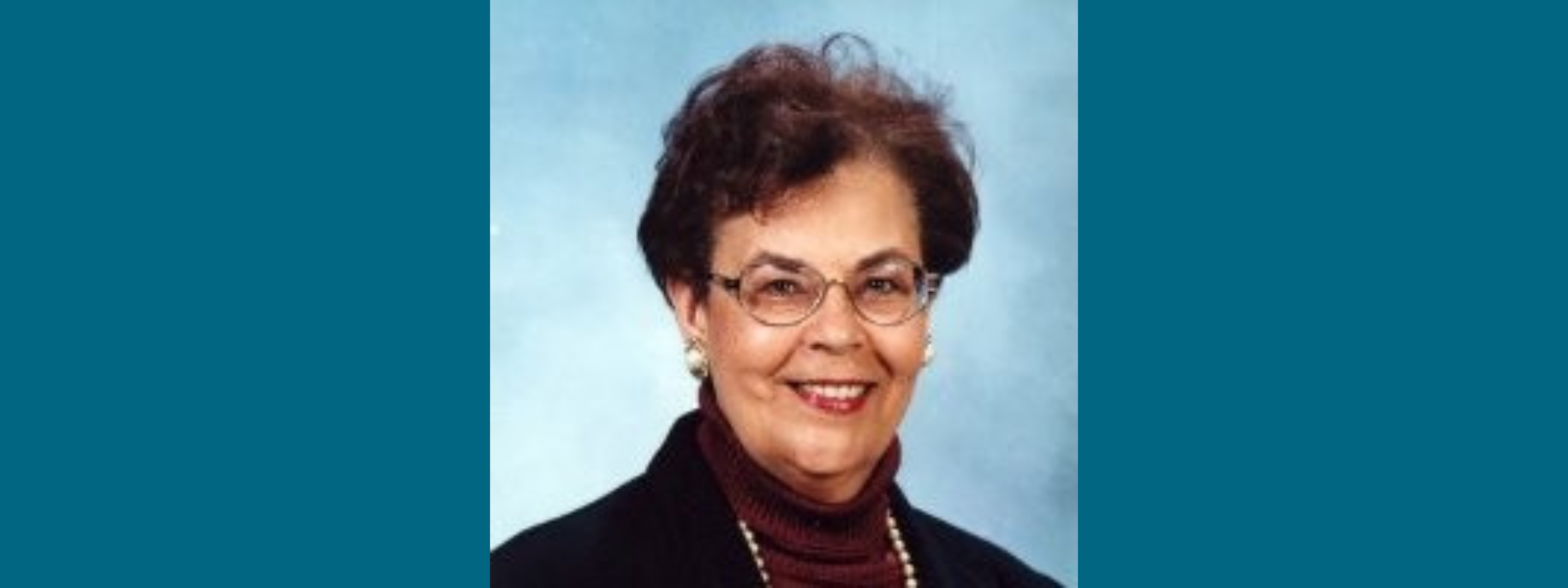
Alumni Spotlight: Henrietta McKee Carter ’64 MM
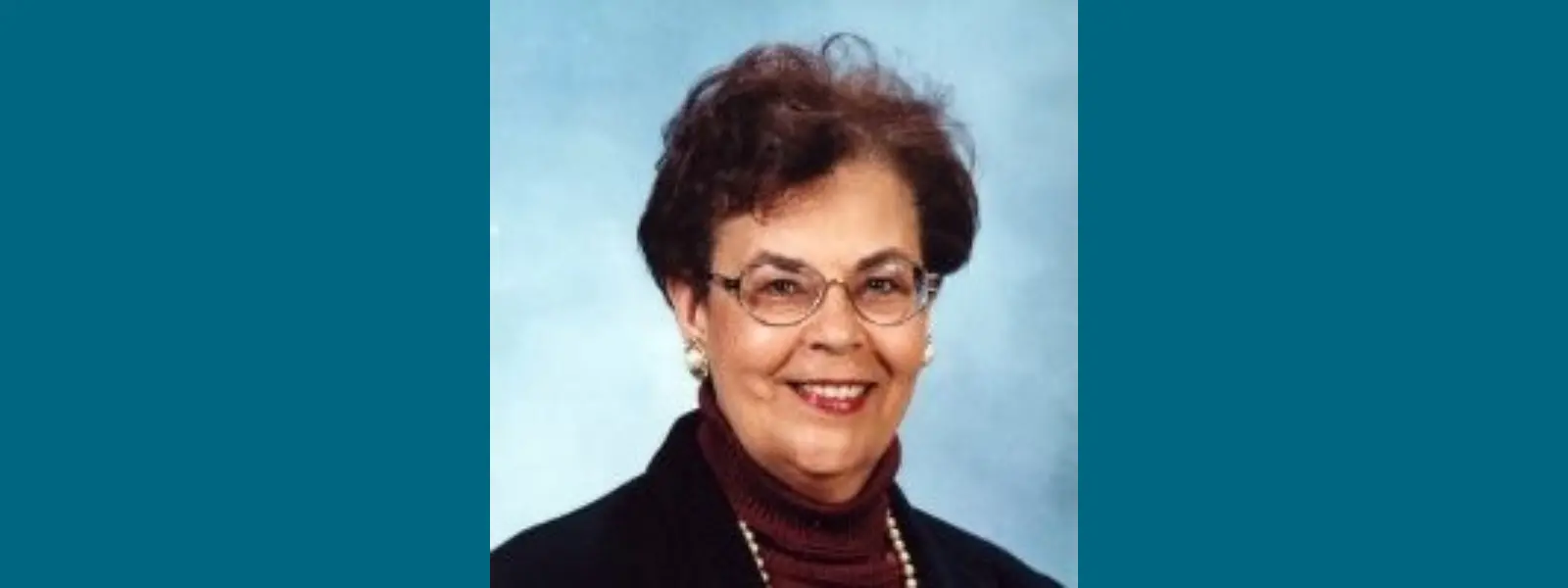
Henrietta McKee Carter earned a master’s degree in Vocal Performance from New England Conservatory of Music in 1964, after receiving her bachelor’s in Biology from Northeastern University. She served as Director of Music at Walnut Hill School for the Arts in Natick, MA until 1968, when she moved to Los Angeles to pursue a Doctor of Musical Arts in Applied Voice and Vocal Pedagogy at USC. She met her husband-to-be soon after arriving in California. Henrietta’s subsequent teaching and singing career included time in Ghana and Italy, as well as 36 years at Golden West College in Huntington Beach, CA, 17 of which were as Department Chair. Since retiring in 2012, Henrietta has been singing in local choirs and learning to play hand chimes and handbells in two other ensembles. She has three sons and seven grandchildren.
Why did you choose NEC?
I used to walk past NEC everyday while attending Northeastern, and I would hear voices floating out of the studios on the second floor. I wanted to be in show business from the age of 10 and discovered my voice at age 13. I wanted to sing like the voices I heard coming out of, what I later learned, was Gladys Miller's studio.
What have you been up to since graduating from NEC? What projects have you been working on? Do you have any goals you are looking to accomplish?
After teaching as Director of Music at Walnut Hill School, Natick (1964-1968), I moved to Los Angeles to pursue a DMA in Applied Voice and Vocal Pedagogy. I hoped to combine my knowledge from my B.S. in Biology with my M.M. in Applied Voice by contributing to the blooming field of voice science research. While pursuing my degrees and teaching, I had a variety of professional singing gigs as a soloist and chorister, and as a choir director in MA and CA. In 1970 I married my husband William Grandvil Carter, and we had two sons in 1971 and 1973, while we both were still in grad school. We moved to Ghana in 1974-1975 where I taught voice and music at the Institute for African Studies at the University of Ghana, Accra. In 1976, I was hired to teach choral-vocal music at Golden West College in Huntington Beach, CA. I became department chair in 1993 and retired from that position in 2012 at the age of 75. My professional singing ended when I had a total thyroidectomy in 1986, followed by 4 years of voice therapy, during which time my husband passed away in 1993. Despite the challenges, singing has remained an important part of my life.
Since retirement I have been singing in several local community choirs and at international festivals, and I have gone on choir tours to Italy, France, Germany, Spain, Portugal, the Czech Republic, Belgium, Holland, Denmark, Alaska, Canada, and China. I have joined the Music Ministry of First Christian Church of Orange, CA, where I play handbells in the Orange Pealers ensemble, and sing in the choir. I have also been playing chimes in “Partners in Chime” at Anaheim Senior Center, and with the Cypress Senior Center chorus, and with a women’s ensemble called the Cypress Choraliers. Most of my groups perform for non-profit organizations. Any proceeds given to us are donated to other non-profits to fund scholarships for music students. I serve on the board of Meritage Vocal Arts Ensemble in Anaheim, CA and am the choir's librarian. I am also on the board of Westminster Chorale in Westminster, CA.
What are some of your favorite memories from your time at NEC?
My favorite year was 1963 to 1964 when I was a dormitory counselor. By living on campus, I really got to know a lot of my classmates, and I could simply walk across the street to practice and to my lessons and classes. I was also relieved of the pressure of having to work as a hospital laboratory technician to support myself. I used to love desk duty in the lobby, listening to students having all day jam sessions and sing-alongs in the parlor. The music would run the gamut from opera to gospel and who knows where else.
Share a story about one of your favorite faculty or studio instructors.
I was chatting with one of my favorites, Bill Tesson, about how my family discouraged me from giving up the full ride I had been offered by Harvard to pursue a Master of Arts in Teaching Biology, to pursue a Masters in Music at NEC. He had commented that he faced the same odds and received similar feedback from his family as a young musician.
I remember the compassion expressed by my piano teacher at NEC, Roland Nadeau, when I was shaking while trying to do my piano placement test with him. He said “I’ll bet you had a knuckle rapper for a teacher.” He was right. He adjusted the repertoire he assigned me accordingly, so I was able to progress and learn to play with more confidence. I used those teaching and playing skills in my teaching later on, and wished I had him for my first piano teacher.
Although I never studied choral conducting with her, I learned a lot from observing how Lorna Cooke DeVaron taught while I was singing in the choir. She was meticulous about details of phrasing. I was immensely surprised and pleased when she complimented my musicianship and phrasing after a quartet singing examination. I felt like I was in the right place, that I belonged in music.
Another person whom I found to be encouraging was Daniel Pinkham. I wrote a paper about the Baroque organ for his class, and he complimented me by saying I understood how an organ works better than some of his organ majors. It has been fun to sing one of his works in a choral ensemble and remember that I was once his student.
How have your NEC experiences shaped your artistic approach?
Wherever I am singing, playing, or studying, I feel the influence of the Conservatory's musicianship instruction and of the Italian school of vocal technique. Conductors have consistently praised my musicianship, even in later years when my voice lost the timbre desired by professional vocal ensembles. "With your musicianship I hope you are singing somewhere, even if we no longer have a place for you here." When I taught choirs, I made sure I corrected singers’ vocal techniques by using the same vocalises that I used when developing my own voice, many of which I learned from Gladys Miller, Jean Drabik, and Bernard Barbeau.
Share any other stories about what has inspired you at NEC and beyond.
I must mention two graduates of NEC who taught at Northeastern University while I was there from 1954-1959, Tucker Keiser and William David Brohn. Tucker Keiser was my classroom music history teacher and choral director during my first four years majoring in biology. Bill Brohn took the position during my senior year. Both of them gave me opportunities as a vocal soloist and encouraged me to keep studying music. They gave me pointers that improved my musicianship and understanding of styles. It was their instruction and encouragement that made it possible for me to shift directions and enter NEC. I only had to make up one year of musicianship and harmony during my year on probation before being fully admitted to the MM in Applied Voice program. And the rest is history.
While teaching in Ghana in winter of 1975, I was asked by my husband's mentor to do a presentation for choir directors from all over Ghana who belonged to the Musama Disco Cristo (Army of Christ) denomination. After I finished, our mentor, J H K Nketia, commented that I had an administrative mind.
When I auditioned for the Los Angeles Master Chorale in the summer of 1975 and was seated in the choir by Roger Wagner, he said "Let's have this marvelous soprano sit right here."
After a review of my teaching by the administration at Golden West College around 1978, the dean said "You have a following. We haven't had anyone like you in this department before."
Some of my students have gone on to become professional singers and to pursue advanced degrees, and eventually became voice teachers themselves. In fact, the director of one of the senior center choirs that I sing in was the student of one of my former students who earned her master's degree in voice. It's like studying with my musical grandchild.
Learn more about Henrietta
Major: Vocal Performance
Degree: Master of Music
Class Year: 1964
Do you want to be featured in an Alumni Spotlight?