
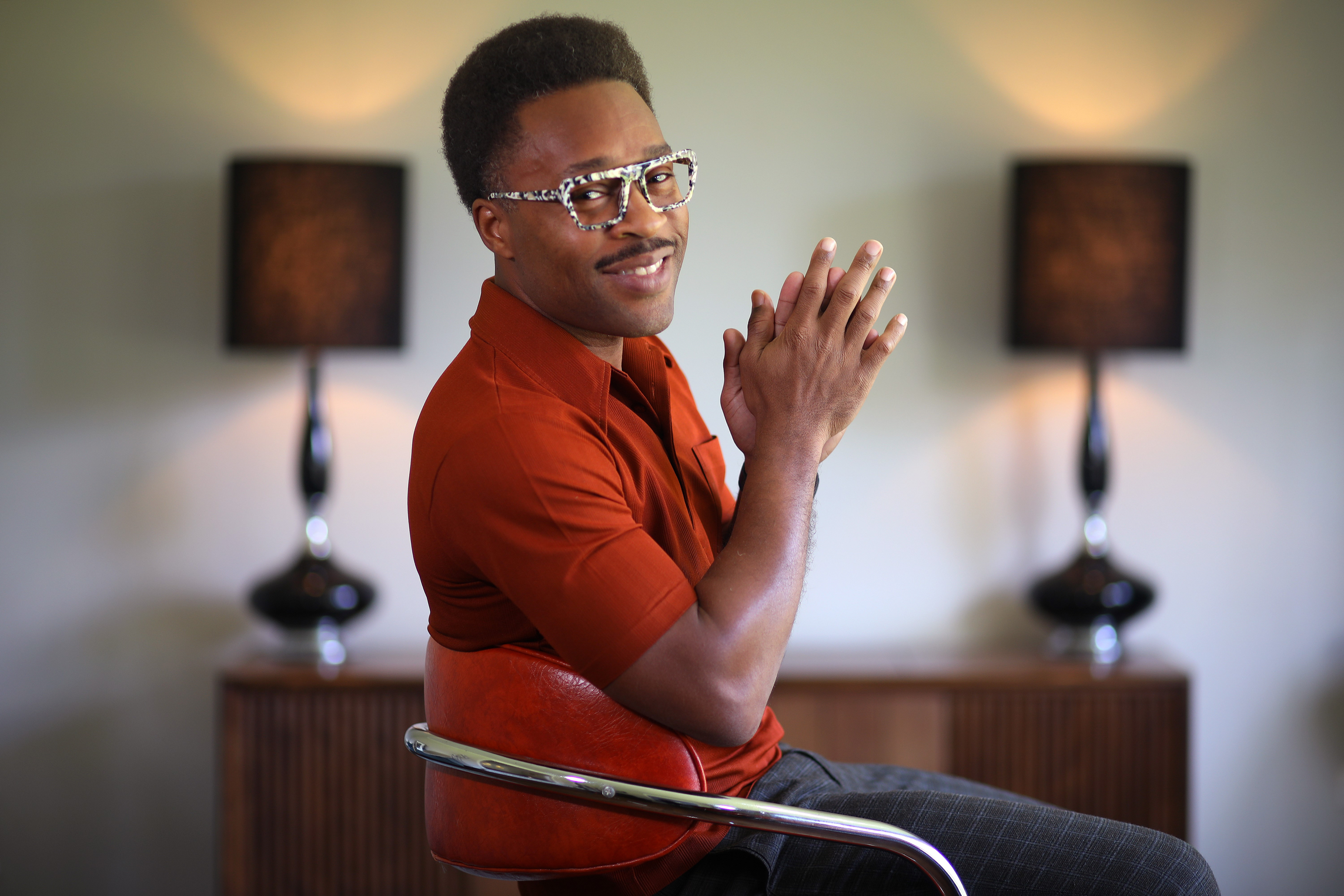
Alumni Spotlight: Richard Johnson ’99 TMIJP
Born in Pittsburgh, Richard D. Johnson was first introduced to the piano at the age of five by his father, a gospel pianist. Since then, he has cultivated a rich and pedigreed musical background, learning from legendary jazz musicians and studying at the most esteemed institutions of music. After graduating from Berklee College of Music, Richard earned a Master’s Degree in Jazz Pedagogy at Boston Conservatory, and later went on to study at New England Conservatory receiving a Thelonious Monk Institute of Jazz Performance Diploma under the direction of Ron Carter ’19 hon. DM.
Richard was a member of Wynton Marsalis' Septet, The Russell Malone Quartet, The Delfeayo Marsalis Quintet, and The Bobby Watson Quartet. After completing his tenure with those groups, Richard started The Reach Afar program in 2003, educating young people about jazz, classical, and hip-hop music. Richard later went on to become a representative of the United States through the U.S. State Department as a Musical Ambassador. During that time he went on six state department tours, affording him the opportunity to perform in more than 76 countries.
Richard is a Yamaha-endorsed pianist and an accomplished composer and arranger with four musical releases as a band leader. His latest co-lead project with Gregory Generet, entitled “2 of A Kind,” features a stellar jazz ensemble consisting of Freddie Hendrix on trumpet, Jon Beshay on tenor saxophone, Barry Stephenson on bass, and Henry Conerway on drums.
Richard is currently the founding member of “Johnson Works LLC,” a management placement service for musicians. Richard also serves as one of two full-time jazz professors at the Peabody Institute of Johns Hopkins University in Baltimore, MD as well as a piano instructor for the Ravinia Festival’s Jazz Program located in Chicago, IL.
Why did you choose NEC?
I learned of NEC through the musicians I would rehearse and jam with. We would sometimes practice at NEC and I remember walking through the halls noticing how different it was from the music school I was attending. From then on I remained curious about NEC and the way they taught music. It wasn't until I attended a Wynton Marsalis masterclass at NEC that I began to earnestly consider attending. While at the masterclass I remember thinking, "This place is serious, I wonder If I could be on this level. Maybe I could go to school here.” Two years later I achieved my goal when I was accepted into the Herbie Hancock Institute hosted at NEC.
What have you been up to since graduating from NEC? What projects have you been working on? Do you have any goals you are looking to accomplish?
Since leaving NEC, I’ve had the opportunity to travel to 88 different countries for my work. I've been a touring artist with both the United States government and Wynton Marsalis, spent two years working as the Musical Director for the National Basketball Association in Atlanta GA, operated a jazz club, and acted as Qatar’s Jazz Ambassador for three years.
Currently, I am a Yamaha-endorsed artist, own a record company, and am a professor of Jazz Piano at Johns Hopkins University. My goal is to build a jazz school in Cali, Colombia by 2025, and hope to eventually partner it with Johns Hopkins.
What are some of your favorite memories from your time at NEC?
I have so many favorite memories from my time at NEC. I always enjoyed seeing my peers practicing and remember thinking, “I want to be great like them, too.” It was very motivating and inspiring. I also really appreciated my private lessons with my piano teacher, Danilo Perez. He really cared about me and my musical journey.
Another moment I remember fondly is my week of classes with guest instructor, Clark Terry. He was a true master and opened up his mind and heart to us in class. He left such a lasting impression that we would eventually reunite outside of school less than a year later.
Share a story about one of your favorite faculty or studio instructors.
My piano teacher, Danilo Perez, went above and beyond. I once told him I was interested in learning Spanish, and from that point on he would talk with me in both English and Spanish to help me develop that skill. He pushed me musically and linguistically, and 25 years later I am still learning Spanish and can even pass as fluent.
How have your NEC experiences shaped your artistic approach?
My NEC experiences helped me go the extra mile in search of greatness. It's easy to give up when things aren't going well. Continuing on your path to reach a goal is something that is very difficult to do, and NEC helps a person understand this.
Share any other stories about what has inspired you at NEC and beyond.
What inspired me most was the level of skill that you could find at NEC, especially in connection with the Boston Symphony musicians who were always in the area. At any given point, you could walk down the hall and hear string quartets playing in a room next to Bob Moses. I remember listening outside his door once as he was practicing and wondering what time signature he was playing in. It was incredible to know that some of the most complex classical and jazz music were all being played in the same place. It's not everyday you have that high level of musicianship right at your fingertips.
Do you have any advice for young musicians/current NEC students?
Practice with a goal. Create a plan, write it down, and face it every day. It will help you focus your practice and achieve your goals faster. Also, finding a great mentor who can guide you with this goal in mind can help get you where you want to go.
Learn more about Richard:
Graduation year: 1999
Degree: Thelonious Monk Institute of Jazz Performance Diploma
Major: Jazz Performance
Instrument: Piano
Current job: Jazz Professor, Peabody Institute of Johns Hopkins University
Website: rjjazz.com
Facebook: facebook.com/AFARMUSICLLC
Instagram: RichardJohnsonJazz
LinkedIn: Richard D. Johnson
Do you want to be featured in an Alumni Spotlight?