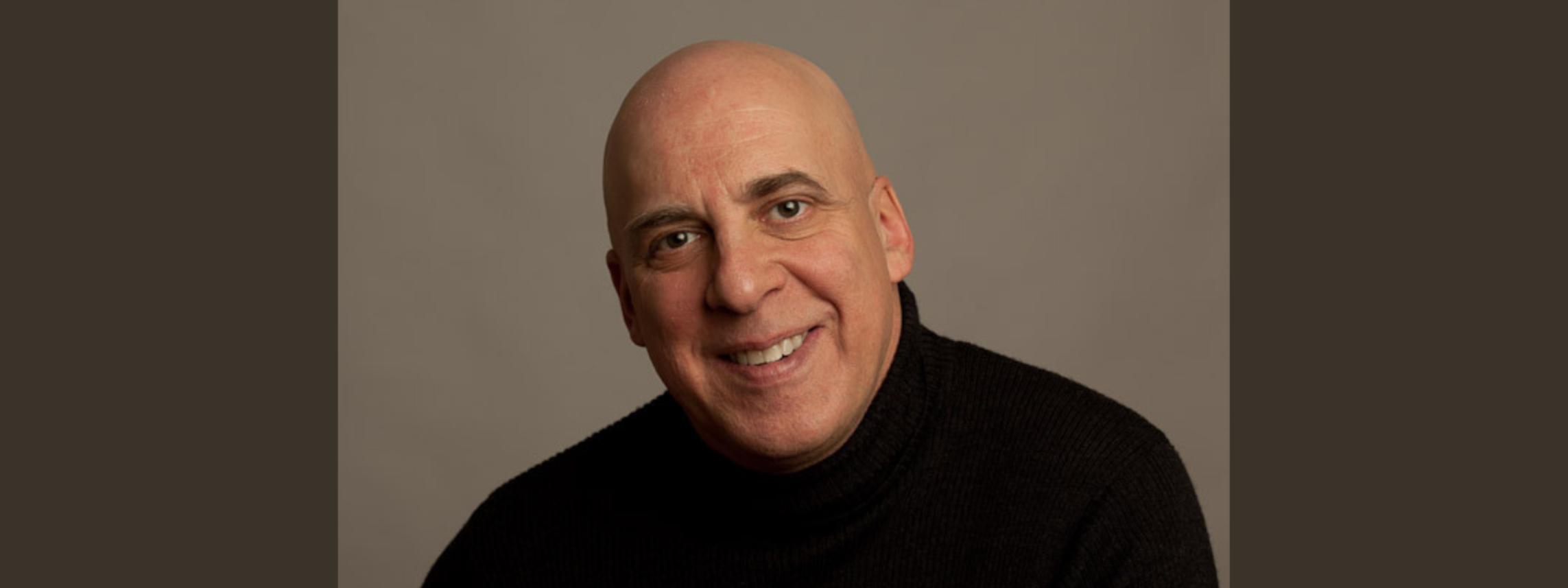
Alumni Spotlight: Wayne Hankin ’80 MM
"The most directly communicative playing came from Wayne Hankin who played bagpipes with the soulful abandon of a medieval John Coltrane." (New York Times)
Wayne Hankin is considered one of the major performers of early classical winds of his generation. He has performed on countless recordings and hundreds of concerts worldwide. Best known for his work with Cirque du Soleil, he has performed in 8 productions, most recently Torruk, based on James Cameron's Avatar. Wayne is well known in Film (The Good Dinosaur/The Lego Movie), Television (Breaking Bad/Disney's Princess Adventures), and Video games (Pixel Privateers/Hero's Charge). A gold member of The Society of Composers and Lyricists, Mr. Hankin has received over 30 awards and grants from ASCAP, Meet the Composer, The National Endowment of the Arts and organizations abroad. He teaches all over the country with major residencies at the Chautauqua Institution and Interlochen Arts Academy.
Wayne's most recent performance with the orchestra was as a guest artist with the Los Angeles Philharmonic and has performed with other orchestras from Glimmerglass Opera to the Chautauqua Symphony. His association with Meredith Monk started in 1983 of which he music directed several of her productions while making his conducting debut with Atlas at the Houston Grand Opera.
Why did you choose NEC?
During the late 1970s, NEC was well known for early music studies which caught my attention.
What have you been up to since graduating from NEC? What projects have you been working on? Do you have any goals you are looking to accomplish?
I am currently working on two main projects:
1. Composing the music for a future television show about the life of writers.
2. The development of Jubo, which is a simpler instrument and methodology that is economical, produces quicker results and is easier to play than the schoolroom recorder. 10,000 instruments have been sold and are now being introduced in Europe.
What are some of your favorite memories from your time at NEC?
Some of my best years were spent at NEC. I will always cherish the camaraderie of the students, being in Boston and Cambridge during the time ice cream changed for the better, and performing in Jordan Hall.
Share a story about one of your favorite faculty or studio instructors.
Daniel Pinkham was remarkably witty and supportive, not only as a composer and teacher, but for my musical efforts. But he wasn't going to give me “carte blanche” on talent alone. Showmanship and playing only go so far, especially if I improvised in a manner he called "too free". He wasn't afraid to call out my shortcomings, everything from garbled program notes to plain old misinformation. Since I had a Bachelor’s in Music History, he demanded I uphold those principles and carry that beyond my graduation. 40 years later, my writing improved and I speak more literally; skills that have advanced my career. If he were alive, he may not approve of the way I still improvise early music, but for everything else I became a more effective communicator, orally and musically. You can't just be just talented today. So although we focused on early music, his guidance was ahead of his time.
How have your NEC experiences shaped your artistic approach?
My time at NEC was brief but productive. NEC was the first college to implement an Early Music program, kickstarting other colleges like Indiana University and Julliard to do the same. Although Early Music never reached the heights we all hoped for, I will always be grateful to the faculty, my fellow students, and the conservatory which produced many of the major players of the movement.
Share any other stories about what has inspired you at NEC and beyond.
Right after I graduated from NEC, I presumed my profession of early music was not self-sustaining and was preparing to supplement my income by teaching in Boston. That all changed when a few weeks later, I was invited to go to Europe to play professionally. That was a time when I had no kids, no mortgage, or anything else that could get in the way. Europe in the 1980s was full of opportunity because the fine arts were well subsidized by many countries versus America. Classical music was their heritage, so there was just more of it. I lived in Berlin where there were 3 major world orchestras, Berlin, SOB and BSO, plus 40 others. Even the police had their own orchestra. So everywhere you walked, everything was subsidized with fine arts.
Do you have any advice for young musicians/current NEC students?
My advice to young people is to first test how far your passion will take you. It won't be as easy as we had it. Then, if you still want to make music, get to know your friends and fellow musicians who are related to your future profession. Those will be the people who will open the doors for you and give you opportunities rather than trying to broadcast yourself over the crowded internet. Who cares if you have so many viewers? It's the face to face that makes the real connections. So, don't just “Facebook” people, face people.
Learn More About Wayne:
Current Job: Founder of Jubo Music
Major: Early Music Performance
Degree: Master of Music
Class Year: 1980
Instrument: Renaissance woodwinds
Do you want to be featured in an Alumni Spotlight?